
Modeling an Empennage
In this lesson, we’ll complete our collection of conceptual aircraft design blocks by modeling the empennage, the tail assembly that provides stability and control. We’ll create a custom block that generates both symmetric horizontal stabilizers and a vertical stabilizer as a unified tail assembly.
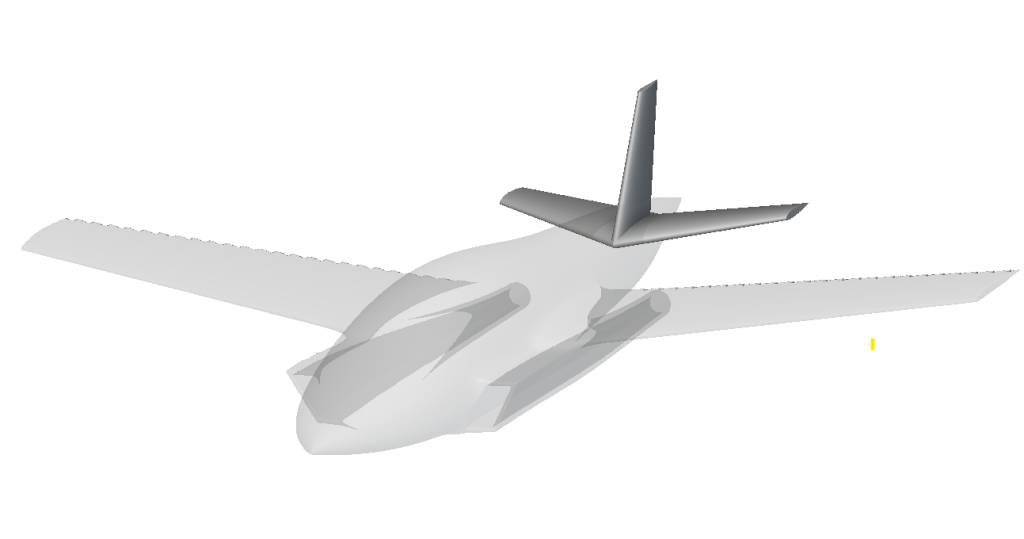
The empennage components, particularly the horizontal stabilizers, share fundamental design principles with wings, allowing us to leverage the parametric workflows we’ve already established. This approach demonstrates how nTop’s modular design philosophy enables efficient reuse of techniques across similar applications.
We will achieve this by the following major steps:
- Generate the horizontal stabilizers.
- Model the vertical stabilizer using existing knowledge.
- Finalize the empennage.
You can follow along using the example file.
Downloadable Files:
This file was last updated in nTop 5.31.2
1. Horizontal Stabilizers
Modify an existing custom block for a new goal.
The horizontal stabilizers form the primary pitch control surfaces of our empennage and share many geometric characteristics with wings. However, unlike main wings, horizontal stabilizers typically maintain a consistent angle of attack along their span and don’t require the twist like we see on the wings.
We’ll leverage the Single Panel Wing custom block from our earlier lesson as our starting point, modifying it for stabilizer use. You can download that CB below to follow along.
Downloadable Files:
This file was last updated in nTop 5.31.2
The key change when modifying this wing-creation notebook involves removing the twist parameter to yield the untwisted planform characteristic of most horizontal stabilizer designs.
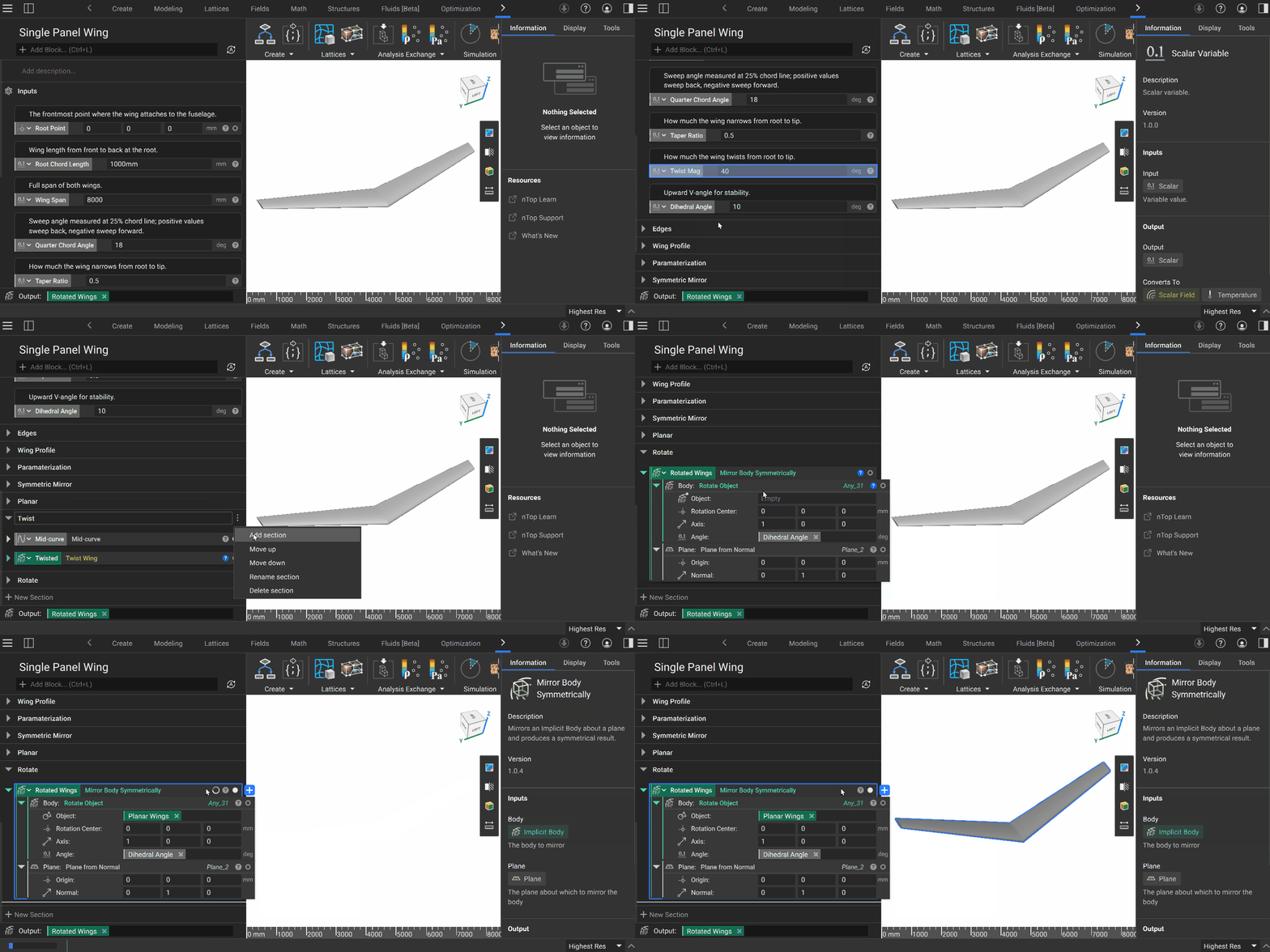
Once we’ve configured the geometry appropriately, we’ll package this modified workflow into a new custom block called Horizontal Stabilizers.
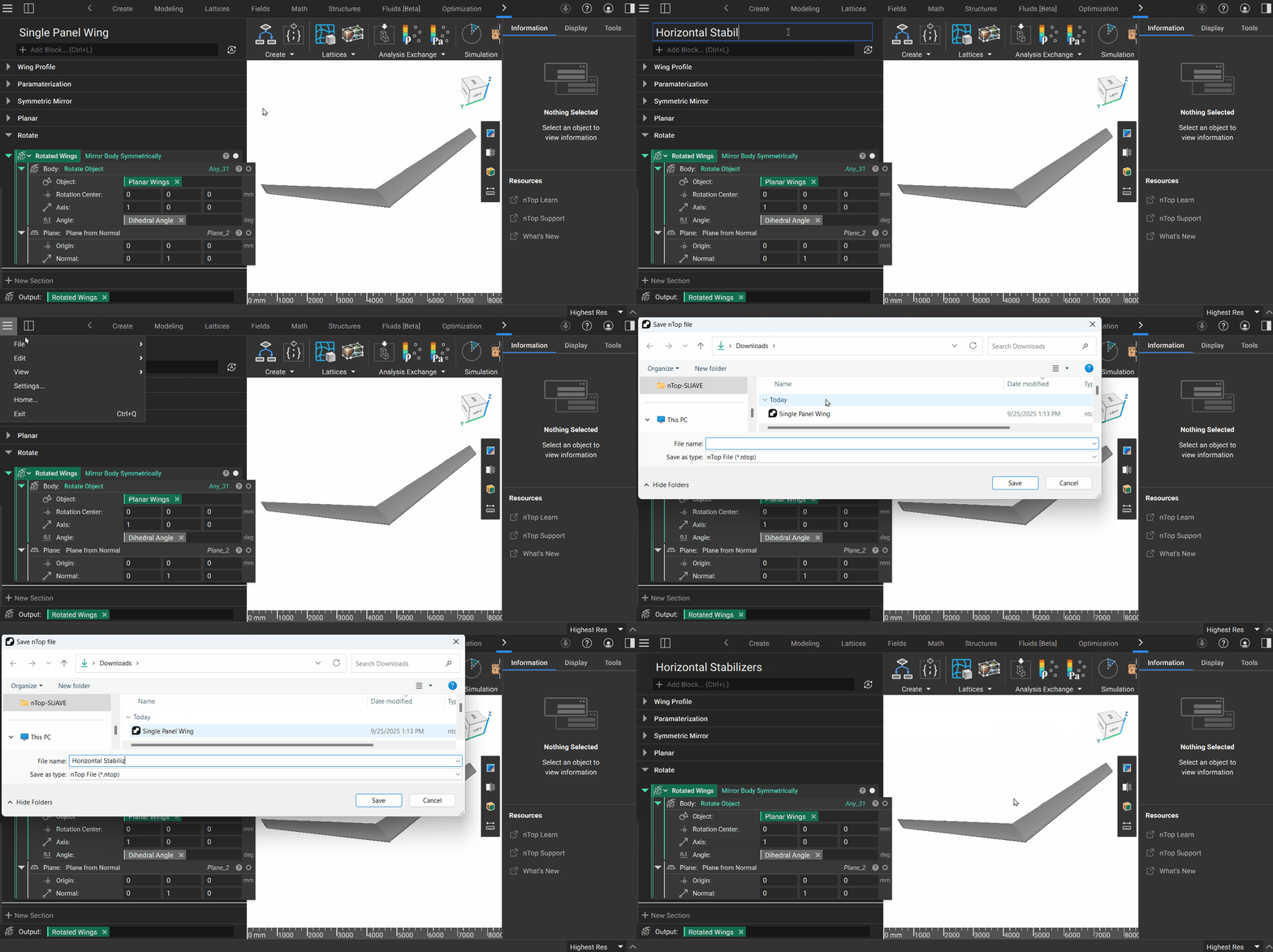
It’s good practice to update the notebook’s description and input names to reflect the new design intent—generating horizontal stabilizers rather than main wings. This ensures clear documentation and maintains the parametric clarity that makes custom blocks effective and reusable.
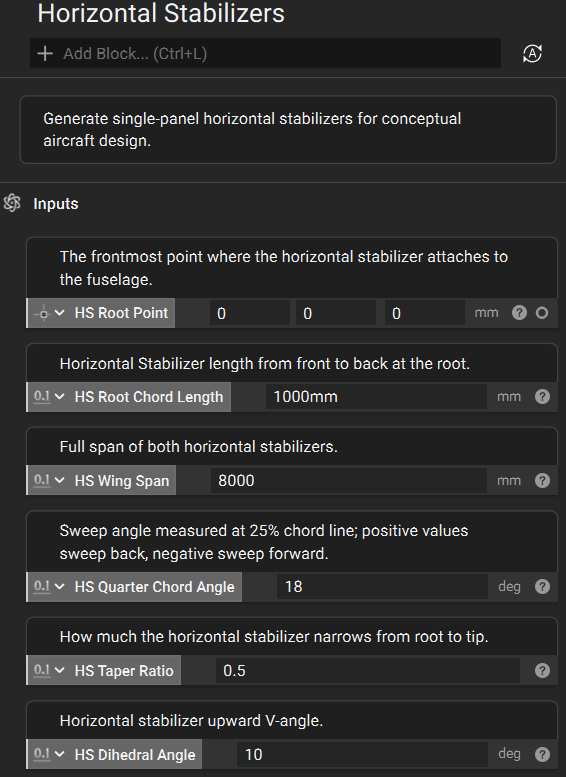
Feel free to follow along below to set up the Horizontal Stabilizers block.
Now we’ve finalized the Horizontal Stabilizers custom block which we can later nest in an Empennage block. This approach demonstrates how nTop’s modular design philosophy allows us to efficiently adapt existing solutions for new applications while maintaining the parametric control that makes our aircraft models flexible and reusable.
Downloadable Files:
This file was last updated in nTop 5.31.2
2. Vertical Stabilizer
Leverage existing knowledge to create a custom block.
Now, we’ll create the vertical stabilizer as a single fin for our empennage. Like we did in the previous step, we will modify our Single Panel Wings custom block, removing unnecessary steps for vertical stabilizer modeling. In this case, we will remove the:
- Twist operation from root to tip
- Dihedral Angle and wing rotation
- Mirror across the fuselage
Now we’ve successfully generated the Vertical Stabilizer custom block we can then feed into our final empennage assembly.
Downloadable Files:
This file was last updated in nTop 5.31.3
3. Finalize
Combine the horizontal and vertical elements into a final custom block.
Now that we’ve created dedicated custom blocks for both the horizontal and vertical stabilizers, we can integrate them into a unified empennage assembly.
In a new notebook instance, we’ll add both stabilizer blocks and promote key parameters to notebook-level inputs, giving us centralized control over the complete tail geometry.
We’ll then make variables of the parameters we want to expose in our Empennage custom block. We can assign these as inputs.
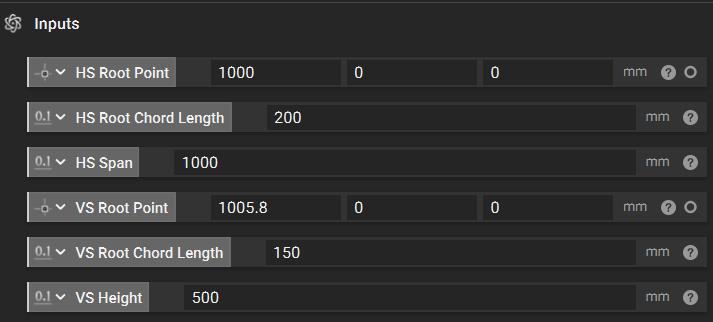
A Boolean Union operation will combine the horizontal and vertical stabilizer bodies into a single cohesive empennage body, which we’ll assign as our output.
Once configured, we’ll package this workflow as the Empennage custom block—providing a complete, parametric tail assembly ready for integration into our aircraft model.
Downloadable Files:
This file was last updated in nTop 5.31.3